
For our second entry, we’re taking on one of the Professor’s least favorite words in modern media: DECIMATE.
I originally came here prepared to prosecute this word’s modern usage for crimes against the English language.Then I checked the historical record and annoyingly, the defense had evidence.
We’ll get to that, but first, the easy part. “Deci” comes from the Latin decem, meaning “ten.” The English word decimate derives from the Latin decimatus, meaning essentially “to reduce by one-tenth.”
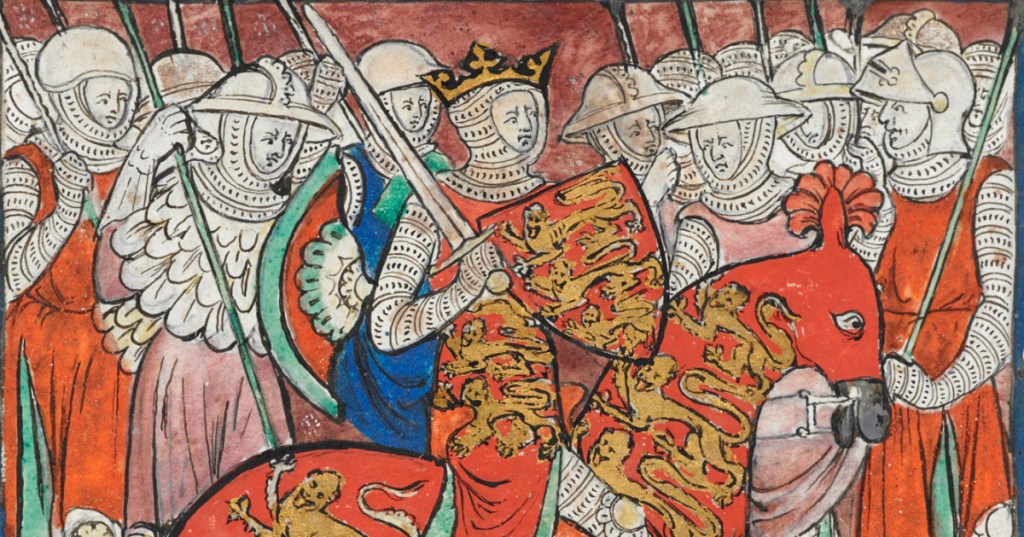
I’d like to go on record that the Romans were not speaking figuratively when they used this term. Decimation was a punishment imposed on military units that had failed their commanders badly enough to merit something beyond a stern talking-to. A unit might be punished for cowardice, mutiny, desertion, poor discipline or some other sufficiently serious offense.
When it was time for a decimation, the condemned soldiers drew lots. One in ten lost—and by “lost,” I do not mean they had to clean the latrines or peel potatoes. The soldiers who drew the marked lots were killed, usually by their own comrades, and that was the point. The Romans were not merely trying to punish the unlucky 10%. They were trying to terrify the surviving 90% into obedience, to teach them that dying on the battlefield was preferable to being beaten to death by their friends.
The practice could also be applied to civilian populations that had rebelled against Roman authority. The mathematics remained brutally simple: Ten people enter, nine people remain. In that context, decimate is an extraordinarily specific word.
This is PRECISELY why your favorite history professor experiences a small involuntary facial twitch whenever a television reporter tells us that a tornado “decimated” a town that has quite obviously suffered considerably more than 10% destruction.
“Surely,” I think every single time I hear it, this is just another example of modern media taking a perfectly useful word and beating it senseless until it means “something really bad happened.”
My search for evidence pissed me off, because I found that English speakers began using decimate more broadly by the mid-17th century, well before the 24-hour news cycle and clickbait were invented. And as it turns out, decimate has also been used to mean severe, widespread or sometimes near-total destruction or reduction—FOR CENTURIES!
It has been used for populations devastated by disease. It has been used for armies. Cities. Industries. Businesses. Wildlife populations. Forests. Economies.
In other words, if the Professor wishes to prosecute modern English for corrupting decimate, the statute of limitations expired several hundred years ago. Case dismissed, right? But I’d like to lodge a formal protest based on one irritating concept: Knowing that the broader usage is historically legitimate has done absolutely nothing to make me like it.
I still hate hearing it. We have TONS of words to denote widespread destruction: devastate, destroy, ravage, wreck, annihilate, obliterate. I didn’t even have to pull out my trusty Thesaurus to give you those! We have an entire linguistic toolbox available when we want to say that something got absolutely clobbered.
What we once had in decimate was something wonderfully precise: Reduce by one-tenth. It’s the loss of the precision that righteously annoys me.
I get that languages change and the words making them up broaden, narrow, mutate and occasionally wander off somewhere completely unexpected. But I don’t have to like it.
What I’m pointing out is the distinction between saying a word’s newer meaning is incorrect and saying its newer meaning has made the language less precise.
I’m going to die on the hill of precision, because let’s say 90% of a flock of birds has to be destroyed because of an outbreak of avian flu. English allows us to say the flock was decimated. Yet if the disease killed only 10% of the flock, we would also say it was decimated.
Somewhere, a Roman centurion is seriously confused.
To recap:
*** Decimate, original meaning: To reduce a population by one-tenth.
*** Decimate, established modern meaning: To destroy, reduce or damage something severely or extensively.
The modern meaning isn’t technically wrong, but I will still grit my teeth and judge you harshly, so by all means, use decimate according to its accepted modern meaning. Even when language changes legitimately, it is worth noticing what gets lost in the process, and that, friends, is the whole point of this blog.
Precision matters.
The next time you use decimate, take a moment and think about what you really mean and what you’re trying to say. Be precise in your word choices.
It matters…because WORDS MEAN THINGS.



Leave a Reply