Entry number three is not a specific word, but rather an explanation of a commonly mis-pluralized term—ATTORNEYS GENERAL.
This particular eccentricity of the English language trips up nearly everybody, whether or not English is their first language.
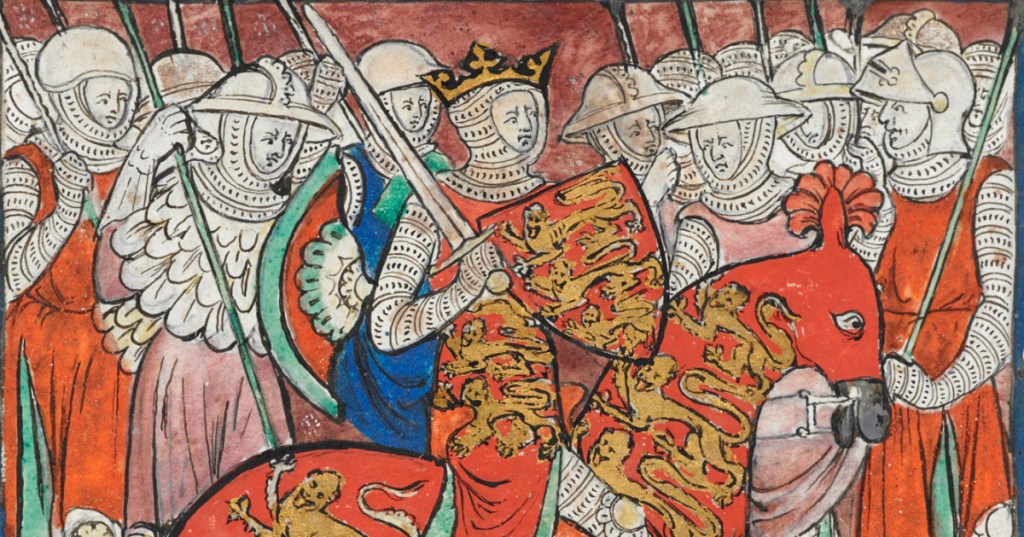
It comes from—believe it or not—the Norman invasion of England in 1066, led by William the Bastard, later known as William the Conqueror. Normans came from Normandy, which in 1066 was exactly where it is now—northern France. These folks spoke a dialect of French, of course, and when they conquered England and took over its elite social/ruling class, they made Norman French the language of government, religion and polite society, while relegating the Germanic language of the Saxons to the lower classes—that is, anybody who was a commoner, a villager, a regular plain old Anglo-Saxon who lived there before the conquest.
As the two populations mixed over hundreds of years, creating the modern genetic pool of England, Scotland and Ireland, so too did their languages mix together. This process culminated in the mashed-together, blended language we call Modern English. It’s one of the reasons we have two words for lots of stuff, but that’s a topic for another entry or two.
With this term (and others like it), we have to look back to French syntax. ATTORNEY is a noun, GENERAL in this context is an adjective; that is, it is a word which modifies a noun. The term “attorney general” is not a compound noun; rather it is a noun + an adjective.
To pluralize attorney, we simply add an s: attorneys. We then use the term attorneys general because in English, the noun gets the pluralization, not the adjective.
Finally, the reason we put the two words together like this is because in French, adjectives come after the noun, whereas in English, we put the adjective first the vast majority of the time. In French, you don’t have a blue flower, you have une fleur bleue. If you pluralize that French term, you get fleurs bleus—both words are pluralized in French.
As Norman French and the language of the Anglo-Saxons merged, the resulting blended language kept some syntactical aspects of each language while dropping others. Putting the adjective after the noun mostly got dropped in English, as did pluralizing both the noun and the adjective.
In case you’re wondering, French for attorneys general is procureurs généreaux, with both words pluralized as is their standard.
Other terms in English similar to attorneys general are:
- Notaries public
- Sergeants major
- Heirs apparent
- Rights-of-way
- Editors-in-chief
- Mothers-in-law
To recap:
*** Attorneys general: The odd-seeming pluralization comes from the French influence on the English language as it developed from the 10th century onward.
The next time you want to use attorney generals, remember your modified French syntax and pluralize the correct word. Be precise in your word choices.
It matters…because WORDS MEAN THINGS.


 Words Mean Things
Leave a comment